Scaling Personalization at Stahl: 127 Campaigns, One Optimization Engine
About Stahl
Stahl is a premium cookware and kitchenware brand that combines innovative design with high-performance products for modern kitchens. As its digital business expanded, the focus shifted from simply acquiring traffic to maximizing the value of every visitor through personalized shopping experiences.
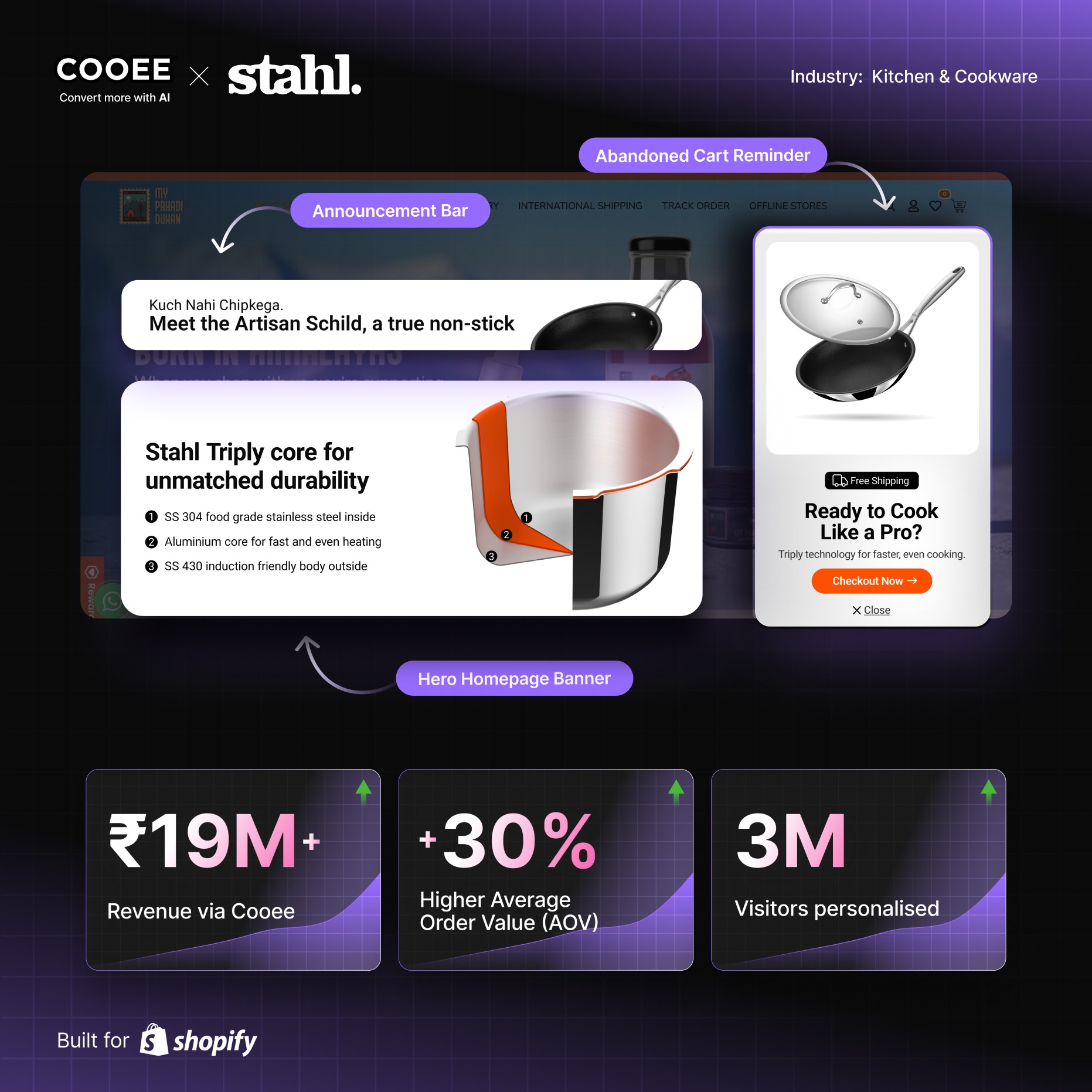
Over a six-month engagement, Stahl partnered with Cooee to optimize key moments across the customer journey using AI-powered personalization and conversion optimization.
Results Snapshot
Over a 180-day engagement, Cooee continuously optimized Stahl's digital shopping experience through AI-powered personalization and experimentation. Rather than relying on a handful of static campaigns, the platform tested and refined experiences across the customer journey to maximize performance.
Objective
Stahl Kitchens had already earned what most D2C brands chase for years: millions of engaged visitors and a loyal returning audience. The opportunity wasn't to find more traffic, it was to make the store as attentive as a great in-store salesperson, recognising that a first-time browser, a returning shopper, and someone with items already in cart are three different people who deserve three different experiences, not one static page.
The primary objectives were to:
Increase conversion efficiency across the website
Improve Average Order Value (AOV)
Personalize experiences for new and returning visitors
Encourage product discovery through dynamic recommendations
Recover high-intent users before they dropped off
Optimization Strategy
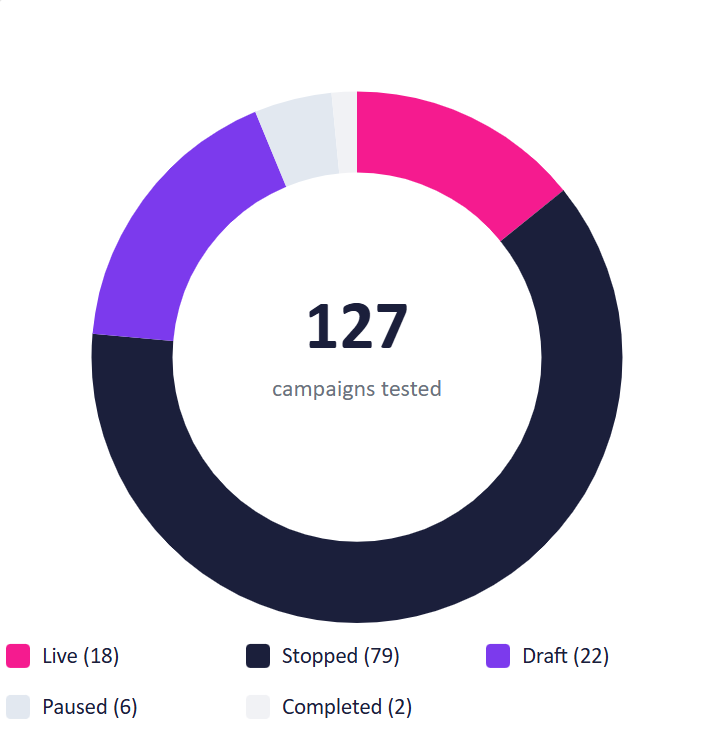
Rather than launching isolated campaigns, the engagement focused on continuously optimizing every stage of the customer journey. Over six months, 127 personalized experiences were deployed across product discovery, engagement, cart recovery, merchandising, and checkout—each informed by real-time customer behavior and performance insights.
As campaigns generated data, high-performing experiences were refined and scaled, while lower-performing variants were paused or retired to make way for new experiments. This iterative approach ensured that personalization continuously evolved alongside customer behavior.
1. Returning Visitors Respond to Familiarity
Performance data revealed that returning shoppers were significantly more likely to convert when shown products they had already explored.
This insight led to campaigns such as Already Viewed Collection – Returning, which resurfaced previously viewed products instead of generic recommendations.
Result
Portfolio-leading 18.5% conversion rate
One of the highest revenue-generating live campaigns
Insight: Personalization performs best when it builds on existing purchase intent rather than restarting the discovery journey.
2. Product Discovery Benefits from Guided Merchandising
Instead of expecting shoppers to browse large product catalogs independently, AI surfaced best-selling products, trending collections, and contextually relevant recommendations.
Campaigns such as Best Seller Collection consistently ranked among the highest-performing merchandising experiences.
Insight
Reducing decision fatigue improves engagement and encourages deeper product exploration.
Shoppable Video emerged as one of the strongest-performing content formats across both product and collection pages.
Rather than asking users to leave the page to learn more, products became discoverable directly within the shopping experience.
Insight
For high-consideration categories like premium cookware, visual storytelling shortens the path from product exploration to purchase.
4. High-Intent Users Need Timely Reminders
Behavior-triggered interventions such as Sticky Add-to-Cart and Cart Recovery proved particularly effective for shoppers already showing purchase intent.
While Sticky ATC generated the highest campaign revenue, Cart Recovery recorded one of the portfolio's strongest engagement rates, demonstrating that small contextual nudges can significantly reduce purchase friction.
Insight
The greatest conversion opportunities often come from helping high-intent visitors complete decisions they've already started.
Why Were Only 18 Campaigns Live?
This deserves its own callout because it's actually a competitive differentiator.
This wasn't campaign churn, it was optimization.
Campaigns were continuously evaluated against engagement, conversion, and revenue metrics. Winning experiences remained active, while underperforming variants were paused or retired to make room for new hypotheses, creative variations, audience segments, and merchandising strategies.
This approach ensures that customers are consistently exposed to the highest-performing experiences instead of outdated campaigns that no longer reflect changing user behavior.
The Payoff
Personalised experiences were concentrated on visitors already closest to buying, and it showed up in order value, not just order count.
Cooee-influenced sessions closed at a 30% higher average order value than the rest of the store, which is why its revenue share (56%) outpaces its order share. Personalisation didn't just add transactions. It upgraded them.
What’s Next?
Expand returning-visitor personalisation as the highest-confidence growth lever.
Scale shoppable video from the product page into collection and homepage placements.
Relaunch the sticky add-to-cart experience with refreshed creative and structured A/B testing.
Run a quarterly revival audit across the stopped and draft pool to resurface proven ideas.
Insights
The engagement reinforced three key principles for scaling eCommerce performance:
Returning visitors represent the highest-converting audience, making personalized re-engagement one of the strongest growth levers.
Interactive content such as shoppable videos helps customers make confident purchase decisions while increasing engagement.
Behavior-driven interventions at critical moments such as cart recovery and persistent add-to-cart experiences reduce friction and encourage users to complete their purchase journey. These insights are also reflected in the portfolio analysis and recommendations from the campaign report.
Weekly newsletter
No spam. Just the latest releases and tips, interesting articles, and exclusive interviews in your inbox every week.
Thank you! Your submission has been received!
Oops! Something went wrong while submitting the form.
Ready to supercharge your e-commerce conversions?
Learn how Cooee can help you tap into the potential of visitor intent and drive more sales!