How a Storefront That Recognised Its Visitors Drove $161K for Voltas
About the Brand
Voltas is India's No. 1 air conditioning brand by market share. The brand sells a wide range of home appliances including ACs, Air Coolers, Water Geysers, Refrigerators, Washing Machines, and Water Dispensers, through one of the country's largest distribution networks. As the brand expanded its direct-to-consumer presence on Shopify, converting high-consideration traffic into online revenue became the central challenge.
The Challenge
The problem was not awareness or demand. Voltas had both. What the brand lacked was a storefront that could respond to its own visitors in real time. Four gaps that were costing the brand revenue:
High traffic, low conversion. A large portion of visitors were leaving without purchasing
No personalized or intent-based tools to nudge visitors at the right moment
AOV was not being maximized. Organic orders existed but basket size stayed flat
No mechanism to recover abandoned carts or re-engage users based on browsing behavior
For a category where a single purchase can exceed $300, each unrecovered session represented meaningful lost revenue.
The Cooee Approach: A Full-Funnel Personalisation Layer
The strategy wasn't to add a popup and call it done. Every major drop-off point in Voltas's buyer journey was mapped, and a layered, intent-aware personalization system was deployed across the full funnel.
01 Intent-Segmented Pop-up Campaigns
A popup that converts a high-intent buyer will annoy a casual browser and vice versa. Intent-segmented popups solve this by reading real-time behavioral signals and delivering the right offer to the right visitor at the right moment.
Visitors were segmented into High, Medium, and Low intent tiers based on real-time behavioral signals like pages visited, scroll depth, time on site, and product interactions.
High-intent visitors (deep in product pages, multiple sessions) → Bold, conversion-focused offers: "Unlock Extra 5% OFF"
Medium-intent visitors (browsing, comparing) → Category-specific nudges for ACs, Water Geysers, and Water Dispensers
Lower-intent visitors → Lighter touches with coupon codes to spark curiosity
02 Abandon-Before-Checkout (ABC) Campaigns
Most visitors don't buy on the first visit, they browse, compare, and leave. ABC campaigns catch them at the exact moment of exit and give them one compelling reason to stay.
Exit-intent personalization was deployed the moment a user showed signals of leaving across ACs, Air Coolers, and Water Geysers. The messaging was direct: "Still thinking it over? Shop AC now & Enjoy ~$11 OFF"
03 Cart Recovery Widgets
An abandoned cart is not a lost sale, it is an unfinished one. Cart recovery widgets re-engage users mid-session, with a personalized reminder of exactly what they left behind.
Persistent on-site cart recovery widgets were deployed. Contextual, session-aware reminders personalized to what each user had left behind.
04 Category Navigation Widgets
If a visitor can't find what they're looking for quickly, they leave. Category navigation widgets remove that friction and surface the right product categories instantly, before a visitor even thinks to scroll.
Home page category icon widgets, optimized for both mobile and desktop, gave visitors one-tap access to key categories. No need to scroll or search
05 Announcement Bar Campaigns
Seasonal demand is the easiest revenue to capture and the easiest to miss. Announcement bars make sure every visitor sees the right offer at the right moment.
Sitewide announcement bars with active promo codes ran across peak demand windows visible to every visitor, on every page. HP Carousel announcements ran alongside to guide mid-funnel visitors toward conversion.
06 Shoppable Video Widget
Not every buyer arrives ready to search. Shoppable video turns passive homepage visits into active discovery moments, letting visitors find, understand, and buy a product without ever leaving the page.
A Watch & Buy shoppable video experience was launched on the Voltas homepage. Currently in the monitoring phase at 1.7% CTR, being evaluated at 3,700 impressions before the next optimisation decision.
Results: 12 Months of Intent-Led Impact
What the Numbers Actually Mean
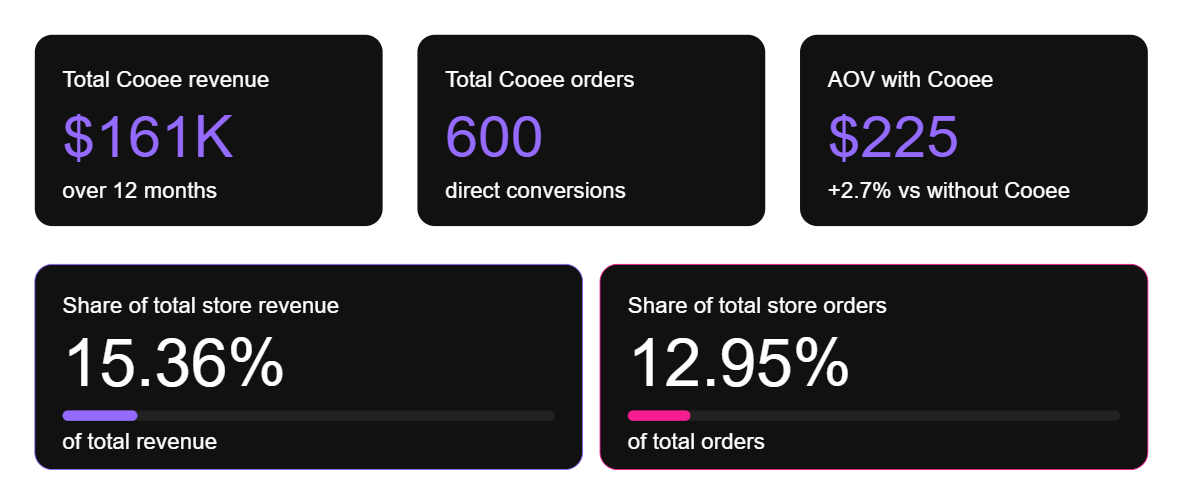
Cooee contributed 15.36% of Voltas's total store revenue with a personalization layer that sits on top of existing traffic, with no additional ad spend.
The ABC popup alone drove $36,600, confirming what Cooee's data shows across categories: for high-consideration purchases, exit-intent personalization is the most underleveraged moment on any D2C site.
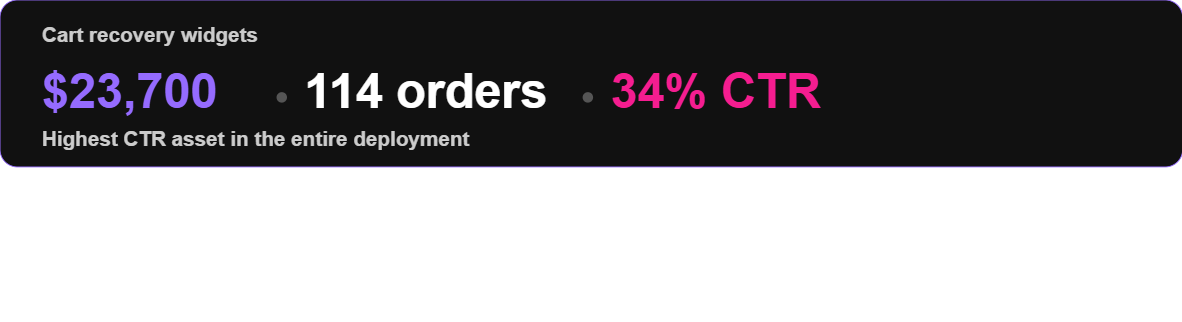
The cart recovery widget hit a 34% CTR. Extraordinary for a passive re-engagement tool, and proof that a personalized, well-timed reminder doesn't feel intrusive. It feels helpful.
AOV rose by $5.80 per order with Cooee. At scale, that's the difference between a good month and a great one.
The Takeaway
Exit-intent is not a last resort, it is a strategy. For high-consideration categories, catching visitors at the exit with a personalized offer converts better than almost any top-of-funnel investment.
Intent segmentation changes what personalization can do. When messaging matches where a visitor actually is in the decision journey, conversion rates follow. Start by separating high-intent from low-intent visitors and build from there.
Cart abandonment is recoverable but only within the session. In-session recovery is dramatically underinvested relative to retargeting and email. A well-timed on-site prompt is often all it takes.
Peak demand needs a peak experience. Brands that build urgency into their storefront before the peak, consistently outperform those that rely on demand alone.
Weekly newsletter
No spam. Just the latest releases and tips, interesting articles, and exclusive interviews in your inbox every week.
Thank you! Your submission has been received!
Oops! Something went wrong while submitting the form.
Ready to supercharge your e-commerce conversions?
Learn how Cooee can help you tap into the potential of visitor intent and drive more sales!