Personalisation Drove 26% of Orders During Flash Sale
Discounts fill the funnel. They don't close it. Here's how real-time behavioural personalisation turned a high-traffic flash sale into measurable revenue — and what your Shopify store can learn from it.
May 12, 2026
Let’s Talk About What’s Actually Happening During A Sale
You have done the work. The discount is live, the ads are running, and traffic is pouring in.
But then you check your conversion rate and it has barely moved. Sometimes it even dips.
Sounds familiar?
Here’s the thing: this isn’t a traffic problem. It’s a conversion efficiency problem.
Sales campaigns attract a wider, more mixed audience—people at very different stages of buying intent. Some are just browsing. Some are comparing. Some are ready to buy right now. Yet most Shopify stores show every single one of them the exact same experience.
On-site personalisation fixes that. It adapts your storefront in real time based on how each visitor is actually behaving. Ensuring you convert more of the traffic that you have already paid for.
The Discount Trap: Why More Traffic Doesn’t Mean More Sales
Discounts are great at getting people through the door. But getting them to buy? That’s a different game.
During a sale, your audience is a mix of:
First-time visitors who stumbled in from an ad
Comparison shoppers bouncing between you and three competitors
Returning users who dropped off last time
High-intent buyers who just need a nudge to check out
A blanket “Flat 30% Off” banner might push that last group over the line. But it does nothing for someone who is still figuring out what they even want.
As traffic scales up, so does the share of low- and mid-intent visitors. Without adapting the experience to match, you end up spending more to acquire people you can’t convert. That’s the trap.
From Static Pop-Ups to Intent-Based Personalisation
Most Shopify stores still rely on basic rule-based triggers like a pop-up after 5 seconds, a discount banner on the cart page, an offer at a certain cart value.
These work to a point. But they are blind to context.
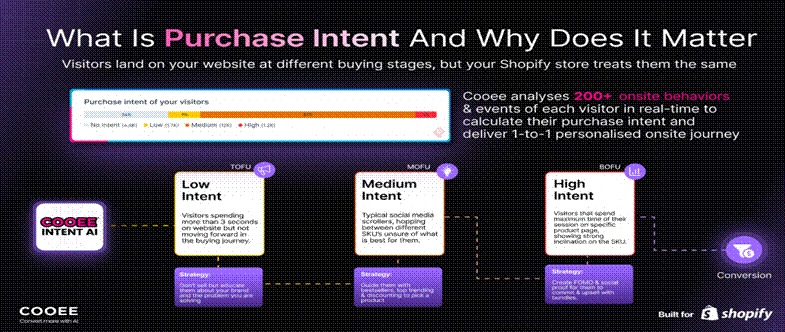
Intent-based personalisation is different. It reads real-time behavioural signals such as pages viewed, scroll depth, time on site, product interactions, and return visits and uses them to understand where each visitor actually is in their buying journey.
Think of it in three broad buckets:
Explorers (low intent): Browsing categories, minimal interaction. They need discovery support i.e. to help them find what’s relevant.
Considerers (mid intent): Comparing products, viewing items repeatedly. They need decision support including social proof, comparisons, nudges.
Deciders (high intent): Adding to cart, returning to the site, showing exit signals. They need urgency and reassurance to close the deal.
This shift, from “trigger X on page Y” to “respond to what this visitor is actually doing”, is what moves the needle during high-traffic events.
How Onsite Personalisation Works During a High-Traffic Sale: A Real Example
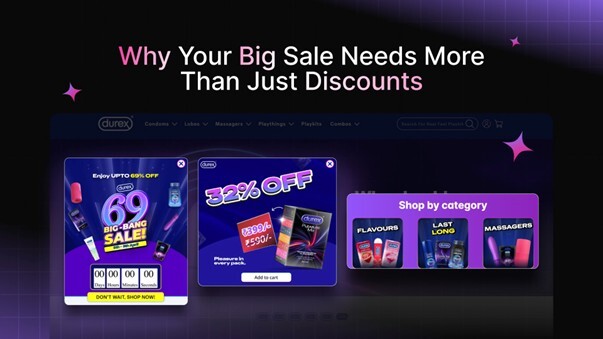
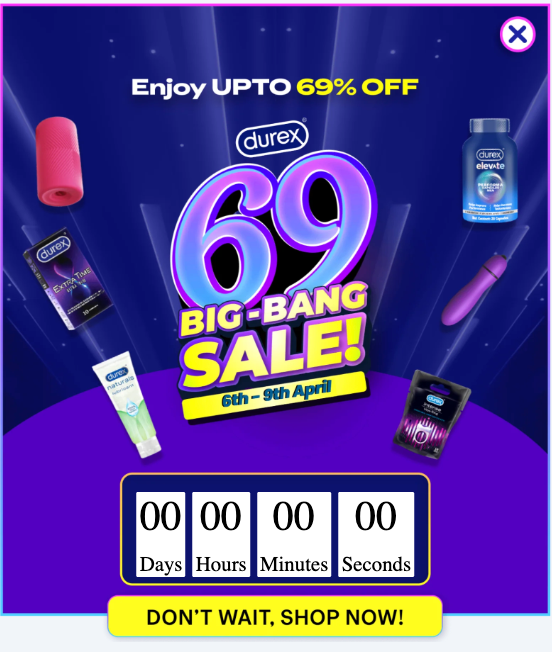
During Durex India’s Big Bang Sale, personalisation was applied across the funnel to respond to different levels of intent. This included:
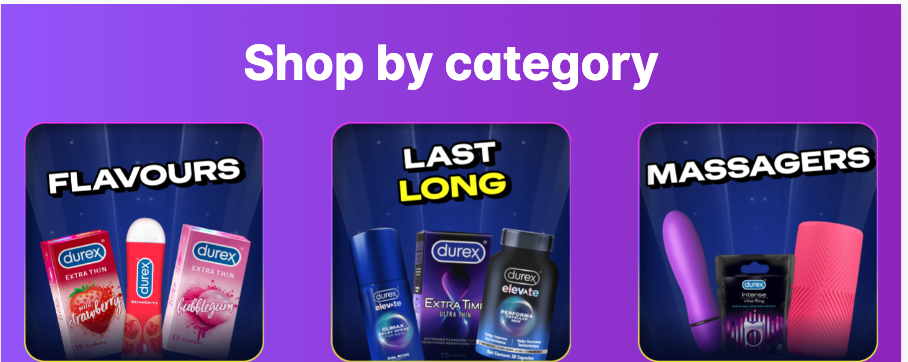
Making Discovery Easier
Category widgets simplified navigation during heavy mobile traffic, driving a ~16.5% CTR and ~0.60% conversion rate. When people can find what they want quickly, they’re far more likely to buy.
Reducing Hesitation at the Product Level
Product-level nudges like social proof and contextual recommendations helped users who were on the fence. The result: 568 incremental orders and ₹314K in additional revenue.
Recovering Carts Before People Leave
This was the biggest win. On-site cart recovery re-engaged 62,000 users during their session, driving 5,500 recovered orders at an 8.9% conversion rate. No email follow-up. No retargeting spend. Just catching people before they’re gone.
Using Urgency Where It Actually Works
Countdown timers improved engagement (7.8% CTR vs 5.6%), but had limited impact on conversion. The lesson? Urgency amplifies existing intent, but doesn’t create it.
Removing Hidden Purchase Barriers
Not all hesitation is about price. For Durex, discreet delivery is a real concern. A simple banner reinforcing "Discreet Packaging" addressed this upfront. No digging through FAQs required.
The Overall Impact
22.9% increase in conversion rate (month-over-month)
26% of total orders driven by personalised experiences
27% of total revenue influenced by these interventions
The bottom line: discounts brought the crowd. Personalisation turned them into customers.
How to Build This Into Your Next Sale
You don't need to overhaul your entire store. A few high-impact changes can make a serious difference.
1. Prioritise In-Session Cart Recovery
Recovering a shopper while they're still on your site consistently beats chasing them with emails or retargeting ads afterward. Show them what they left behind, remind them the sale is live, and make checkout frictionless.
2. Be Smart About Urgency
Countdown timers work but only on visitors who are already close to buying. Firing them at casual browsers just trains people to ignore them. Save urgency for cart-stage users, return visitors, and exit moments.
3. Design for Mobile First
Most sale traffic arrives on mobile. If your overlays are cluttered, your navigation is buried, or your CTAs are hard to tap, you're losing people before they even consider buying. Keep it clean, obvious, and fast.
4. Treat Returning Visitors Differently
Someone coming back to your store is a deferred sale waiting to happen. Show them what they viewed last time, surface their cart, and give them a clear reason to finish what they started.
5. Cover the Full Funnel
The best-performing stores don't rely on a single pop-up to do all the work. They meet shoppers at every stage of the journey:
Funnel Stage
Personalisation Layer
Awareness
Announcement bars, sale messaging
Discovery
Category widgets, curated collections
Consideration
Product nudges, social proof
Decision
In-session cart recovery
Exit
Intent-based offers, last-chance nudges
This is how you build a system that captures value at every stage not just the last click.
What You’re Leaving on the Table
When personalisation drives roughly a quarter of all orders during a sale, as it did here, not having it isn't a neutral position. You are overspending on acquisition to compensate for a funnel that leaks at the bottom, and losing your most valuable visitors right at the finish line.
For brands operating at scale, that’s a structural disadvantage.
Where Cooee Fits In
If you are running a Shopify store and thinking “this sounds great, but how do I actually do this?”- that’s exactly what Cooee was built for.
Cooee analyses visitor intent in real time and delivers personalised experiences across the funnel, from discovery widgets to cart recovery, without requiring you to manually set up dozens of rules. The Durex results above? Those were powered by Cooee.
It’s not about adding more tools to your stack. It’s about making the traffic you are already paying for work harder.
FAQs
Does personalisation work if my Shopify store gets high traffic only during sales?
That's actually when it matters most. Flash sales attract a much wider mix of intent levels — first-timers, comparison shoppers, impulse browsers — all at once. Behavioural personalisation identifies where each visitor is in their journey and responds accordingly. High-traffic moments are the highest-leverage time to have it running.
Will setting up onsite personalisation slow down my Shopify store?
No. Cooee doesn't modify your theme files or add render-blocking scripts. Personalisation experiences load asynchronously, so your core page speed stays unaffected — even during peak sale traffic.
How quickly can I see results from Shopify personalisation?
Most brands see measurable impact within their first campaign. In-session cart recovery and intent-based nudges show results fastest because they work on visitors who are already close to converting — you're capturing value from traffic you already have.
Do I need a developer to run personalisation on Shopify?
No. Cooee is built for marketers and store owners. You can set up campaigns, define audience segments, and go live without touching a single line of code.
How is this different from a standard Shopify pop-up app?
Most pop-up apps fire on simple rules — time on page, exit intent, cart value. Cooee reads real-time behavioural signals to understand each visitor's intent and personalises accordingly. One interrupts. The other responds.
Ready to get more from your sale traffic? Learn how Cooee uses real-time intent to deliver the right message to the right visitor at the right moment.